Going nuclear: Convincing the public

by Gan Pei Ling /30 June 2010 © The Nut Graph

MALAYSIA’s first nuclear power plant is expected to be up and running by 2021.That’s just one decade away. Public concerns have already been expressed about the astronomical start-up costs, safety, and radioactive waste management of having such a nuclear plant. In response, Energy, Green Technology, and Water Minister Datuk Seri Peter Chin told Parliament on 7 June 2010 that the government would be conducting road shows to educate the public.

(Pic by merlin1075 / sxc.hu)

Additionally, Tenaga Nasional Bhd (TNB) has begun branding nuclear energy as “green” energy. It seems the government is bent on going nuclear so that we don’t lose out to our neighbours. For certain, there is big business involved. South KoreaFrance, and other foreign nuclear industries are already eyeing to tap into Malaysia’s new multibillion-ringgit nuclear market.

Still, the government must allay serious and legitimate fears about nuclear power. It cannot expect that there will not be public protests unless these fears are convincingly addressed.

Not alone

Malaysia is not alone in wanting to pursue nuclear power. Asean countries began flirting with the idea of harnessing nuclear energy for electricity generation around the 1960s.

The Philippines was the first to build a nuclear power plant in 1976. However, the project became a white elephant after the plant was found to be unsafe as it was constructed near major earthquake fault lines.

Since then, other Asean countries have announced plans to go nuclear due to rising fossil fuel prices. In 2007, Myanmar signed a deal with Russia to build its first research reactor, while Thailand declared that its first nuclear power plant would be operational by 2020. In late June 2010, Vietnam announced it would be building eight nuclear power plants in the next 20 years.

Others like Cambodia and Singapore have also indicated keen interest.

Show us the plan

Since the Malaysian government is so determined to play catch-up with our neighbours, here are some steps it can take to convince the Malaysian public that nuclear is indeed a safe, clean, and affordable energy option.

1. Where’s Malaysia’s radioactive waste management plan?

The government has identified potential sites in Pahang, Johor and Terengganu to build the plant. But it has yet to make public what it plans to do with the radioactive waste generated.

(Pic by flaivoloka / sxc.hu)

Will we be shipping our radioactive waste to France to be reprocessed or are we storing it in our own country? If we are shipping it half a globe away to be reprocessed, what measures are the government taking against terrorist attacks? Plutonium, which will be among the radioactive waste generated, is commonly used to make atomic bombs.

If we are storing it in Malaysia, where will it be stored? I imagine Pakatan Rakyat-led states would be among the first to say no. Will other states be willing to offer their states as a dumping ground? After all, even for the Broga incinerator project, there was so much public protest that in the end, the project was cancelled.

2. What’s Malaysia’s emergency plans?

For all they want, the nuclear industry can boost their safety record after the tragedies of Three Mile Island in 1979 and Chernobyl in 1986. But the truth is, the industry has continued to be plagued by other accidents and radioactive leaks during the past few decades.

What will the Malaysian government do in the event of a radioactive leak, fire, floods, or in the worst case scenario, a nuclear meltdown? What are the emergency plans that will be put in place? Show us you are prepared to deal with potential natural and human-caused disasters.

3. Give us financial security.

The nuclear industry is also notorious for cost overruns and construction delays. The latest example would be the new generation reactor in Finland, which was supposed to be completed last year. Its price tag has increased almost 50% to €4.2 billion due to safety issues in its design.

What steps are the government taking to ensure that Malaysia’s nuclear reactor will not go down the same path as Finland’s reactor? Who will foot the bill if we do? Surely the government does not expect to use taxpayers’ money to bail out the project if it goes beyond its original budget of between RM6 billion and RM13 billion. Perhaps the current ministers, TNB’s directors, and any other party that is so determined to push for nuclear energy to satisfy Malaysians’ “surging energy demand” can offer to fork out their own money.

The truth is…

Radioactive waste from nuclear energy will likely outlive human civilisation. That’s why, without a viable waste management plan, it is irresponsible to set up nuclear reactors. Even developed countries like Germany, which depend significantly on nuclear for its energy, have yet to figure out where to store their waste permanently.

Indeed, high-level waste generated from a reactor has to be stored in steel containers that must also last beyond human life. If the government were to be entrepreneurial, it could of course sell eternity ad spaces on these steel containers for a nifty sum. That would help reduce the government’s deficit for certain. But it would still not address the legitimate fears people have about nuclear waste.

Susilo Bambang (Source: presidensby.info)

And lest the government forget how critical public support is, Indonesia had to postpone its plan to build nuclear power plants indefinitely, partly due to public protest. Its president, Susilo Bambang Yudhoyono, said on 19 June 2010 that the country would instead focus on developing renewable energy such as geothermal, wind, solar and biofuels.

For now, the Malaysian government doesn’t actually have a plan that addresses the safety issues of nuclear energy. And for so long as it doesn’t, it cannot hope that road shows alone will convince the public.


Gan Pei Ling believes in renewable, instead of, nuclear energy. She is a member of NukeOff, a Malaysian youth group that questions the government rationale of going nuclear. Her column, , will be a fortnightly offering on The Nut Graph.

Related post: The nuclear waste dilemma

What happens under ISA detention

by Gan Pei Ling / 30 June 2010 © The Nut Graph

THE Home Ministry is expected to table amendments to the Internal Security Act (ISA) in the current July parliamentary sitting. However, it remains unclear whether judicial review will be included among the amendments. Without the inclusion of judicial review, the ISA remains a law that allows for detention without trial.

Prime Minister Datuk Seri Najib Razak promised to review the ISA when he came into office in April 2009. But the government continues to defend the need for detention without trial in the interest of “national security”. In the meantime, those who have been detained under the ISA tell stories of state abuse of power and torture.

In this second of a series of interviews with former ISA detaineesThe Nut Graph speaks with Mat Sah Mohd Satray and his wife, Norlaila Othman, about his arrest and detention under the ISA in April 2002. Mat Sah, a technician from Dewan Bahasa and Pustaka, was arrested together with 13 other suspects for allegedly being involved in terrorist organisations.

Mat Sah and Norlaila were separated for seven years during his detention

Mat Sah was only released from the Kamunting detention centre in September 2009. And it was only on 12 June 2010 that police removed all restrictions on his movement. Mat Sah and Norlaila, who became an active member of Gerakan Mansuhkan ISA (GMI), spoke to The Nut Graph on 16 June 2010 at their Gombak home.

TNG: Mat Sah ditangkap pada 17 April 2002. Boleh ceritakan apa yang berlaku pada masa itu?

Mat Sah: Polis datang rumah pada pukul 12 malam, masa itu hanya ada saya, isteri, dan anak saya yang berumur lapan tahun dalam rumah. Saya belum tidur lagi, dengar ada bunyi depan, saya pun pergi tengok. Masa itu gelap, tetapi saya nampak ada seorang polis pakai uniform. Dia tanya saya, “Boleh cakap dalam?” Saya pun buka pintulah, lepas itu tujuh, lapan orang terus masuk dan gari tangan saya.

Saya tanya mengapa gari saya, dia cakap, “Saya terima maklumat bahawa awak terlibat dalam aktiviti yang mengancam keselamatan negara.” Dia tak cakap di bawah ISA atau tunjukkan waran pun.

Lepas itu?

Norlaila: Lepas itu mereka mula menggeledah rumah kami sampai pukul empat pagi, buka almari, buka laci, baju dalam pun mereka semak, bawah katil, bawah cadar sampai bilik ketiga. Kami letak banyak buku dalam bilik ketiga, mereka seronok jumpa banyak kertas, setiap buku mereka semak, lepas itu mereka jumpa artikel saya, dalam artikel itu ada gambar Saari Sungib, seorang pemimpin NGO (badan bukan kerajaan) yang ditahan di bawah ISA pada tahun 2001. Mereka nampak gambarnya, terus kata, “Ini! Ada link dengan Saari Sungib!” dan terus ambil artikel saya. Artikel itu saya punya, tetapi yang kena tangkap suami saya.

Mereka juga ambil CD games seperti Star Wars, CPU komputer, telefon bimbit, dan kamera. Saya ambil gambar SB (Special Branch) dengan kamera filem itu. Saya tak tahu mereka takut kamera. SB rampas kamera padahal sebenarnya mereka boleh ambil filem sahaja. Apabila saya ambil balik barang-barang tersebut tiga minggu kemudian, semuanya sudah dirosakkan dan terpaksa dibuang.

Mat Sah: Selepas mereka habis geledah, saya dibawa ke dalam sebuah van putih, depan duduk dua orang polis, belakang dua orang, sebelah satu orang, escort ada satu van lagi. Mereka bawa saya dari rumah pergi ke IPD (Ibu Pejabat Polis Daerah) Ampang. Selepas lebih kurang setengah jam, saya dibawa ke balai polis Sentul, ambil gambar di sana, mereka tak tanya soalan pun.

Sampai hampir terang, naik van sekali lagi, mata saya ditutup degan kacamata hitam, sampai destinasi baru dia buka.

Report on Mat Sah’s arrest in 2004; he is pictured bottom right

Mereka bawa you ke mana ni?

Mat Sah: Pada masa itu saya tak tahu, saya dikurung selama 59 hari di sana. Selepas itu, baru saya dapat tahu tempat itu Police Remand Centre dekat Jalan Ipoh.

Sampai sana, dia suruh saya buka baju, semua pakaian ditanggalkan termasuk seluar dalam, dia check lah.

Lepas itu, dia bagi satu baldi, baju uniform lockup, cawan plastic untuk minum, sabun sebiji, tuala kecil, itulah untuk lap muka dan mandi, berus gigi dengan Colgate. Berus gigi itu dia potong sampai pendek sahaja; dia kata, “Takut nanti you bunuh diri.”

Dalam bilik yang saya tinggal itu ada satu katil simen, tak ada tingkap, hanya lubang-lubang kecil di atas dinding, kena selalu mandi kerana panas. Makanan yang dibaginya, macam apa yang YB Teresa [Kok] cakap, memang teruk. Ada satu kali dia bagi makanan basi.

Saya diberi nombor 095 di sana, selama saya di situ, dia tak panggil nama, saya sudah tak ada nama, dia panggil nombor saya sahaja.

Dalam dua bulan itu, hanya tigu minggu saja saya dikenakan interrogation, yang lain itu hanya duduk dalam bilik itu. Mereka panggil saya pada pukul sembilan pagi, dibawa ke sebuah bilik, dalam bilik kecil itu ada dua, tiga air-con pasang kuasa penuh, beberapa jam duduk situ. Mahu buang air pun mereka tak bagi pergi ke tandas, bagi botol.

Selalu ada tiga officers, seorang buat kita senang, pujuk-pujuk: “Mau makan apa? Minum apa?” Seorang lagi buat kita marah, dia akan tanya soalan macam: “Bagaimana you buat seks dengan isteri?”

So selepas dikurung dua bulan di sana, baru you dihantar ke Kamunting?

Mat Sah: Ya, semasa di sana, tiap-tiap pagi kena bangun pada pukul tujuh nyanyi Negaraku. Dua tahun pertama saya buat, lepas itu saya tak ikut lagi.

Mana ada pemulihan? Saya di sana dua tahun pertama, mereka tak tahu nak buat apa dengan saya, mereka selalu tanya saya, “Nak buat program apa?”

Ada bacaan tak di sana?

Mat Sah: Sana ada suratkhabar, Utusan (Malaysia) dan NST (New Straits Times). Pada masa saya masuk ada perpustakaan tetapi tutup. Selepas beberapa tahun baru dibuka balik.

Renewal of Mat Sah’s two-year detention period in 2004, 2006 and 2008

Bila isteri boleh jumpa you?

Mat Sah: Tiap-tiap minggu boleh, tetapi untuk 45 minit sahaja. Itupun bercakap guna interkom dan dipisahkan dengan dinding cermin.

Pernah masuk cell confinement?

Norlaila: Dia pertama kali masuk cell confinement pada tahun 2005 kerana akak. Masa itu saya ambush (Menteri Dalam Negeri) Pak Lah (Datuk Seri Abdullah Ahmad Badawi) untuk menyampaikan surat memintanya membebaskan semua tahanan ISA. Hari berikutnya, dia dimasukkan ke dalam cell confinement.

SB juga marah apabila saya menulis tentang penahanan Tan Hoon ChengTeresa Kok, dan RPK (Raja Petra Kamarudin) dalam blog saya. Apabila SB marah, suami saya didenda SB!

Mat Sah: SB akan bagi warning: “Isteri awak terlalu aktif dengan GMI, nanti you lambat bebas.” Tetapi bila saya tanya mereka kenapa tahanan-tahanan lain yang isteri mereka tidak aktif dengan GMI tidak dibebaskan pun, mereka tak dapat jawab.

Pernahkah mereka menggunakan kekerasan terhadap you?

Mat Sah: Pernah sekali, pegawai-pegawai kem memukul dan mendenda semua tahanan JI (Jemaah Islamiyah) dan KMM (Kumpulan Mujahidin Malaysia). Mereka tuduh kami simpan senjata bahaya dalam kem. Tetapi pisau lipat, gunting, dawai dan klip kertas yang mereka temui semasa pemeriksaan blok sebenarnya adalah alatan yang kami gunakan untuk program handikraf kita. Peralatan itu semua disediakan oleh pihak kem.

Dalam kejadian itu saya ditumbuk, disepak, ditolak ke lantai dalam keadaan kedua-dua tangan saya digari ke belakang dan tercedera. Dada saya berasa sakit dan saya minta nak pergi jumpa doktor tetapi tidak dilayan. Saya dibawa berjumpa doktor hanya setelah tiga hari.

Norlaila: Apabila di Hospital Taiping, doktor cakap tulang rusuk kirinya ada retakan selepas tengok x-ray, tetapi bila peguam nak pastikan betul ke ada retak di tulang, doktor kata tak ada apa-apa masalah. Dia pun tunggu luka itu sembuh sendiri.

Document declaring Mat Sah’s release

Ada apa perbezaan dalam layanan terhadap tahanan-tahanan?

Mat Sah: Peraturan sama sahaja, cuma nak dapat apa-apa kena request lah. Bukan setiap kali dapat, mahu telefon pun susah. Tetapi apabila tahanan Hindraf masuk, mereka semua boleh dapat macam-macam kemudahan, termasuk buat panggilan telefon. Selain itu, dalam kantin, tahanan Melayu atau Cina [kerakyatan Malaysia] kongsi guna satu dapur, tetapi Hindraf ada dapur sendiri kerana mereka tak makan daging.

Norlaila: Semasa Hindraf ditahan, bila saya pergi sana, kami kena cakap melalui interkom. Hindraf di sebelah sana pulak, boleh pegang, boleh kiss, kemudian boleh pesan makanan yang dijual di kantin kem, pesan roti canai, chapati, semuanya boleh.

Saya pandu dari Kuala Lumpur ke Taiping selama lapan jam pergi balik setiap minggu untuk jumpa suami tetapi hanya berpeluang bercakap melalui interkom selama 45 minit. Tetapi Hindraf, kalau mereka dua minggu tidak jumpa, mereka boleh jumpa selama tiga jam.

Apa yang berlaku selepas Mat Sah dibebaskan?

Mat Sah: Memang banyak berubah. Balik rumah rasa terlalu banyak barang, ada sofa, meja. Dalam kem tak ada apa-apa pun. Isteri sibuk dengan aktiviti GMI dan anak juga sudah ada fikiran sendiri, tetapi saya boleh faham lah. Cuma semasa bertemu dengan orang luar, rasa kekok dan lain. Saya rasa macam orang lain sudah tahu saya tahanan ISA. Saya khuatir orang itu akan anggap saya orang jahat. Mungkin orang lain tak fikir begitu, tetapi saya sendiri akan fikir begitulah, kena adjust lah.

Strengthening Dewan Negara

by Gan Pei Ling / 9 June 2010 © The Nut Graph

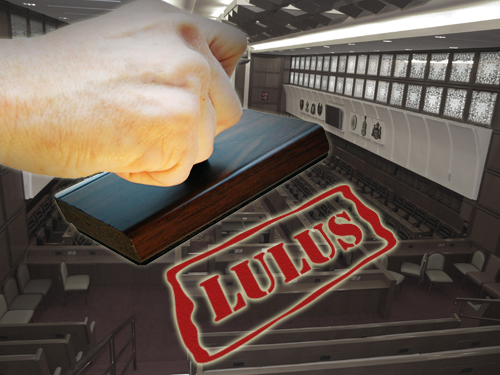
THE Dewan Negara, or Senate, has long been perceived as a “rubber stamp” of the Dewan Rakyat or Lower House in Malaysia. In a Westminster parliamentary democracy, the Senate is meant to provide checks and balances on the Lower House. Indeed, healthy democracies thrive because of checks and balances.

(Rubber stamp by prototype7/sxc.hu)

(Rubber stamp by prototype7/sxc.hu)

That the Dewan Negara in Malaysia has ceased to play that role effectively is cause for concern. At least one senator, Dr Syed Husin Ali, wants to see the Dewan Negara strengthened. Six months after his December 2009 appointment, Syed Husin, who is also Parti Keadilan Rakyat (PKR) deputy president, launched a campaign to reform the Senate. He is, of course, not the only citizen with such concerns.

Syed Husin and civil society groups have a host of measures they would like implemented. What are they? How will these measures make a difference, and will they gain any traction?

Role of the Senate

Senators are responsible for scrutinising and debating bills that have been vetted by the Dewan Rakyat before they can be passed as law. The Upper House in other democracies such as the US and Australia wield considerable power. In Australia, for example, the Upper House can block legislation originating from the Lower House.

In Malaysia, the Senate cannot veto any bill passed by the Dewan Rakyat. However, Syed Husin explains that the Dewan Negara can amend or delay the passage of ill-considered legislation. But this has happened so rarely that headlines were made when women senators vehemently opposed controversial amendments to the Islamic Family Law in 2005. Eventually, these women senators were compelled by the party whip to vote for the bill.

Syed Husin

Syed Husin

“Once, 15 bills were passed in the Senate in two days,” Syed Husin adds in a phone interview with The Nut Graph on 2 June.

“We need to revive the Senate and make it more effective,” he concludes.

Political appointments

Syed Husin also points out that according to Article 45(2) of the Federal Constitution, appointed senators are supposed to be distinguished in public service or their profession, or represent racial minorities and indigenous peoples.

Today, he notes, the Senate has instead become “the ‘back door’ for politicians who have lost in the general elections to be made ministers or deputies”. In Malaysia, only a member of the Dewan Rakyat or Dewan Negara can be appointed to the cabinet.

Syed Husin cites the example of Gerakan president Tan Sri Dr Koh Tsu Koon, who lost in the 2008 general election but was appointed a senator and a cabinet member later. Umno Wanita chief Datuk Seri Shahrizat Abdul Jalil and former MCA Wanita chief Datin Paduka Chew Mei Fun were also appointed as the Women, Family and Community Development Minister and Deputy Minister in the same way.

In Prime Minister Datuk Seri Najib Razak’s 1 June cabinet reshuffle, three politicians – People’s Progressive Party (PPP) senior vice-president Datuk Maglin Dennis D’Cruz, and MCA vice-presidents Datuk Donald Lim Siang Chai and Gan Ping Sieu – were sworn in as senators after their appointments as deputy ministers were announced.

  • A Kohilan Pillay (Gerakan) – Deputy Foreign Minister
  • Datuk Dr Awang Adek Hussin (Umno) – Deputy Finance Minister
  • Datuk Donald Lim Siang Chai (MCA) – Deputy Finance Minister
  • Gan Ping Sieu (MCA) – Deputy Youth and Sports Minister
  • Heng Seai Kie (MCA) – Deputy Women, Family and Community Development Minister
  • Datuk Seri Jamil Khir Baharom (Umno) – Minister in the Prime Minister (PM)’s Department
  • Datuk Maglin Dennis D’Cruz (PPP) – Deputy Information, Communications and Culture Minister
  • Datuk Maznah Mazlan (Umno) – Deputy Human Resources Minister
  • Datuk T Murugiah (PPP) – Deputy Minister in the PM’s Department
  • Datuk Raja Nong Chik Raja Zainal Abidin (Umno) – Federal Territories and Urban Well-being Minister
  • Datuk Seri Shahrizat Abdul Jalil (Umno) – Women, Family and Community Development Minister
  • Datuk G Palanivel (MIC) – Deputy Plantation, Industries and Commodities Minister
  • Tan Sri Dr Koh Tsu Koon (Gerakan) – Minister in the PM’s Department

BN senators who are also ministers or deputy ministers

Apart from these political appointments, the Senate has also become overgrown with appointed members. Originally, there were more state-elected senators, Syed Husin says.

Currently, 44 out of the 70 senators are appointed by the Agong on the prime minister’s advice. They outnumber the 26 senators who are elected from the 13 state assemblies.

“There should be a balance between federal and state interests in the Senate, as recommended by the Reid Commission (the independent commission that drafted the Malaysian constitution),” argues Syed Husin.

Elections

“Direct election is the best way to reform the Dewan Negara,” says Tan Sri Dr Abdul Hamid Pawanteh, who was Senate president from 2003 to 2009.

The Umno veteran points out that Article 45(4) of the Federal Constitution provides for the direct election of senatorial seats allocated for states. The clause also allows the number of appointed members to be decreased or abolished.

Abdul Hamid

“It’s in the book, we don’t even have to amend the constitution. We just need Parliament to pass a bill,” says Abdul Hamid in a phone interview.

Syed Husin agrees on the need for elections. One of his proposed measures in strengthening the Senate is to let professional groups and minorities like the Orang Asli elect their own representative. This would be an interim measure, he says, until a mechanism is devised that enables these groups to ably compete in direct elections.

Minority interests

Syed Husin is also proposing that the number of senators who represent state interest be increased from two per state to three, as constitutionally provided for.

He suggests that this third state senator should be elected, while the other two remain appointed. Additionally, positions in the Senate that are not allocated for professional or minority groups should be elected positions, not appointed. He says this would be an interim measure until full elections can be held for the Senate.

Political scientist and The Nut Graph columnist Wong Chin Huat agrees that all senators should be elected, but by using a party listproportional representation system. This system would ensure that a party is able to secure seats in proportion to the amount of popular votes it has garnered. The current system, where a simple majority suffices to secure a seat, has resulted in parties winning a number of seats that are disproportionate to its popular votes.

A report, Transforming the Nation: A 20-Year Plan of Action for Malaysia, has also recommended that all states be given at least three seats in the Senate. The report suggests that more populous states like Selangor may be given additional seats, on the condition that they remain under-represented.

“This is to check the power of larger states,” Wong, who is one of the report’s drafters, explains. The document was written by academics with input from grassroots leaders.

The document also recommended that Sabah, Sarawak and Labuan should in total hold at least one third of the seats in the Senate. That way, East Malaysians can veto any constitutional amendments that affect their interests.

Wong

Wong

“Meanwhile, the over-representation of East Malaysians in the Lower House now may be reduced as part of a package solution,” Wong adds.

Additionally, the document proposes to allocate three seats to Orang Asli voters, and one seat each to Eurasian and Thai Malaysians in the Senate. “There is no way these minorities can swing the vote in a statewide election, and we need senators who will speak out for them,” Wong says.

Despite these recommendations, Syed Husin admits that reforming the Senate is going to be an uphill task. For now, he is just trying to popularise the idea of reform among voters. Whether or not Senate reform occurs will depend on just how much traction these ideas gain in years to come.